

For the past couple of weeks, I’ve been sitting with one question: God, why do You hate sin so much?
I can never fully comprehend God’s love for me. But something almost as hard to grasp is His hatred for sin. Strangely, the answer to both questions is found in the same place, the Cross.
The Cross reveals both. It shows us how much God loves sinners, and it shows us how much God hates sin.
Scripture describes sin as having a distinct, pungent smell. I’ll admit something: when I pray, I sometimes catch myself saying, God, please stay away from me. I am filthy. It isn’t a daily prayer of course, but on the days I can barely bring myself to cry out to Him, those are the words that escape. I am dirty. Depart from me. I never understood why I felt this way until I looked closer at Scripture.
How Does Our Sin Make God Feel?
Isaiah 65:5 records God saying, “Keep away; don’t come near me, for I am too holy for you! Such people are smoke in my nostrils, a fire that keeps burning all day.”

God compares sin to smoke filling His nostrils — like the smell of trash burning.
Isaiah 1:13 shows God speaking to Israel as they continue their religious activities without repentance: “Stop bringing meaningless offerings; incense is an abomination to me.”
Even worship becomes offensive to Him when unconfessed sin lies behind it.
Amos 5:21–24 goes further. God says, “I hate, I despise your religious festivals… your assemblies are a stench to me.”
Imagine that… people singing, praying, offering sacrifices, and God saying, I hate it.
Why? Because unrepentant sin is the worst offense to Him. Falling short is one thing; we all fall short of His glory all the time. But deliberately falling into the same hole over and over, without ever turning back, becomes a stench to Him.
Even Our Worship Can Offend Him
Outward worship without inward repentance is offensive to God. Which is exactly why David prayed, “Search me, God, and know my heart; see if there is any offensive way in me.” Even David, a man after God’s own heart, understood that even he carried sins he wasn’t yet aware of.
The Aroma That Pleases God
Zac Poonen once said something in a sermon that has stayed with me: if you tell one lie before you know Christ, you’ve committed a single sin. But if you tell a lie after tasting the goodness of Christ, it’s as though you’ve committed a thousand sins, because, as Scripture says, you are trampling on the blood of Christ. Literally stamping on Him, every time you deny Him after having already tasted Him.
This is a heavy place to sit. I’ve spent this first half of this blog telling you that our sin smells pungent before God, and that unrepentant sin is an abomination He hates with a passion. But 2 Corinthians 2:15 offers us the solution: “For we are to God the pleasing aroma of Christ among those who are being saved and those who are perishing.”
Why does Paul choose the word aroma? Every Jewish believer reading that line would immediately know what he was referring to: The sacrifices in the Old Testament.
After the flood, Genesis 8:20–21 tells us Noah offered burnt offerings, and “the Lord smelled the pleasing aroma.” Leviticus 1:9 describes a burnt offering as “an aroma pleasing to the Lord.” Numbers 15:3 echoes it again. A pleasing aroma. A pleasing aroma. A pleasing aroma.
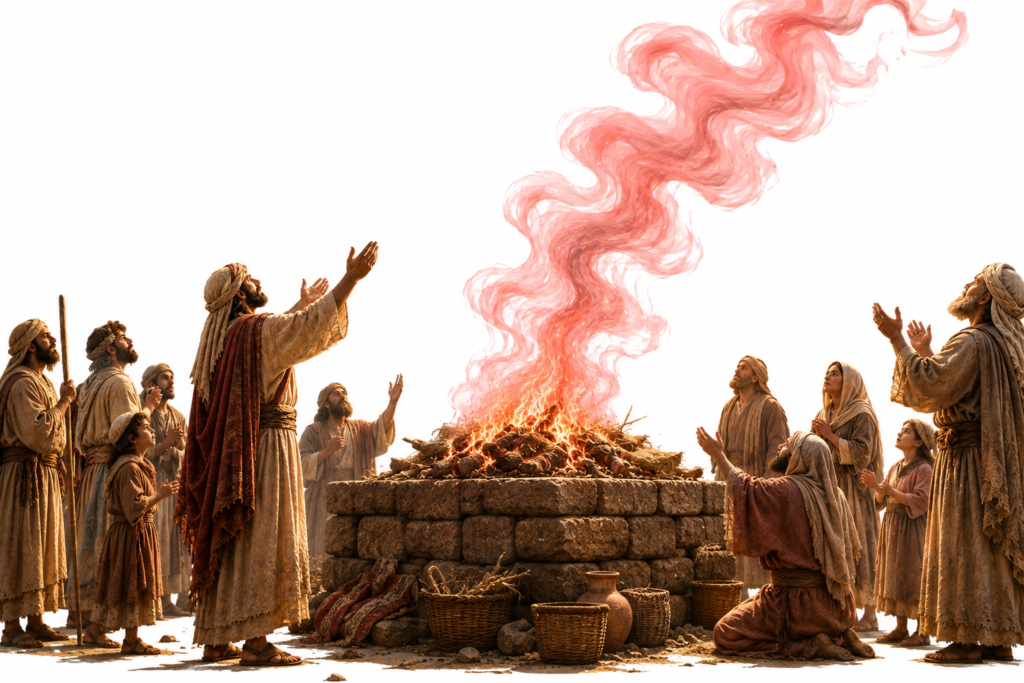
Then Paul says something astonishing. Ephesians 5:2: “Christ loved us and gave Himself up for us, a fragrant offering and sacrifice to God.” Jesus became the ultimate sacrifice. Every offering in the Old Testament pointed toward Him. He became the pleasing aroma before the Father.

And then Paul says something even more remarkable. Philippians 4:18 — “Your gifts are a fragrant offering, an acceptable sacrifice, pleasing to God.” Because of Christ, even our worship becomes pleasing to God, not because we’ve become righteous on our own, but because we are clothed in Christ.
Lazarus and the Smell of Death
In John 11, Lazarus had been dead four days. Jesus arrives and says, “Take away the stone.” Martha immediately objects: “Lord… by this time there is a bad odour, for he has been there four days.”

Death has a smell. Decay has an odor. But Jesus doesn’t run from it. He doesn’t avoid the dead. Instead, He shouts, “Lazarus, come out!” And Lazarus walks out, still wrapped in grave clothes. Jesus then says, “Take off the grave clothes and let him go.”
Before any of that happens, though, we read something remarkable. John 11:33–36, Jesus sees everyone weeping. He is deeply moved. And then comes the shortest verse in the Bible: Jesus wept.
The God of the universe, crying out loud. The One who hates death. The One who hates sin. He doesn’t even take the time to wipe His own tears. We tend to picture an angry God recoiling from the smell of our sin, but here is that same God, standing at the tomb of a man He is about to raise, weeping over what sin and death have done.
Yet God Longs to Save
Even though God hates sin, He longs to save the sinner. If you want to know what God’s personality is like, nothing captures it better than this verse:
Isaiah 30:18 — “Yet the Lord longs to be gracious to you; therefore He will rise up to show you compassion. For the Lord is a God of justice. Blessed are all who wait for Him.”
The Gospel
Maybe today, you’re still wearing grave clothes like Lazarus. Maybe there’s still an odor of death lingering over parts of your life, a hidden sin, a shame you haven’t spoken aloud, an addiction, a bitterness, a pride you keep dressing up as something else.
Whatever it is, Jesus is standing outside your tomb today, saying: Come out!
Come out of death. Come out of shame. Come out of sin. Come out into His pleasing aroma.
Because He doesn’t simply call you out, He clothes you.
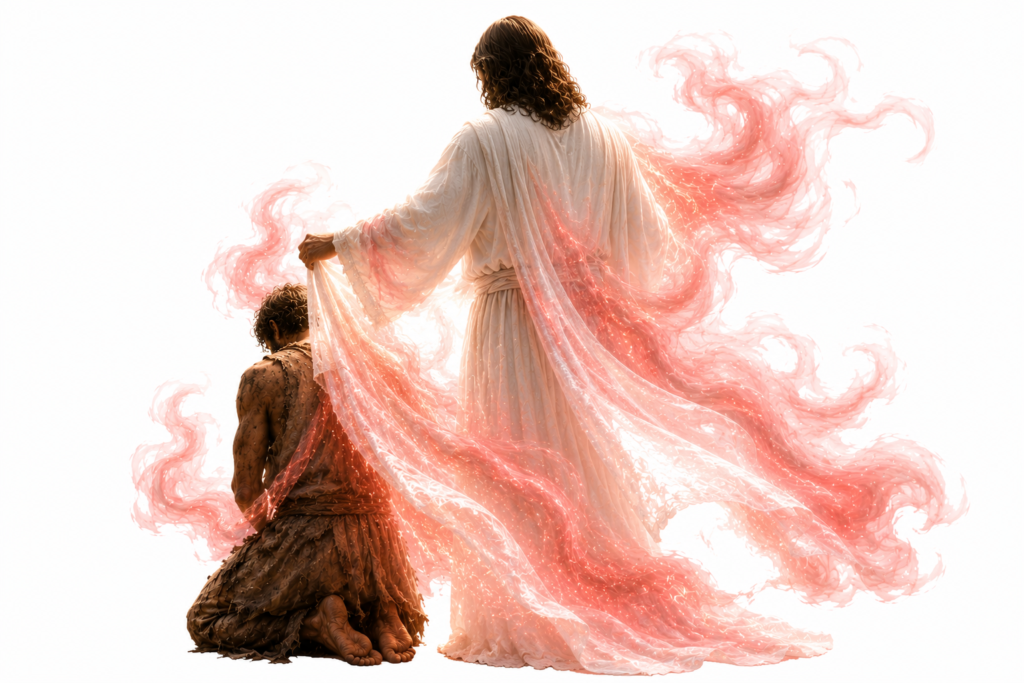
Revelation 7:13–14 — “They have washed their robes and made them white in the blood of the Lamb.”
Isaiah 61:10 — “He has clothed me with the garments of salvation and covered me with the robe of righteousness.”
Jesus removes our grave clothes and clothes us with His righteousness. He takes away the smell of death and gives us His own fragrance, so that before the Father, we become the aroma of Christ.