
If Jesus didn’t rise from the dead, Christianity is false. Plain and simple.
But if the resurrection did in fact happen, it should at least raise some eyebrows, right?
Skeptics often say, “Okay, so some old men wrote about a man dying and maybe rising from the grave. Could’ve been a hoax.”
Fair. But if that’s your standard for measuring historical evidence, let’s apply it evenly shall we?
People trust the accounts of Alexander the Great without much question, even though the earliest full biographies of him were written over 400 years after his death. I studied Shakespeare in college. Yet we have no original manuscripts of his plays. The famous First Folio was compiled in 1623, using actor recollections and stage scripts. Consider Homer’s Iliad: over 1,800 manuscripts survive, but the earliest complete copy dates more than 1,000 years after it was written. And what about Plato and Aristotle? Their writings survive only in copies made 1,000+ years after they lived, yet no one questions their core ideas.
Now take the New Testament: Over 5,800 Greek manuscripts, more than 24,000 total, and early fragments like P52, dating within 30–50 years of the originals, all affirm Jesus’ death and resurrection.
The New Testament stands up to, and often surpasses, the standards we accept for every other text from antiquity. If we’re going to hold ancient writings to a certain standard, let’s at least be intellectually honest and consistent.
Fine! He Lived, But Did Jesus Really Die?
Yes.
Not because you read it here or saw someone say it once on a YouTube Short, but because history affirms it.
A brief look at historical and medical evidence confirms that no one has ever survived a Roman crucifixion. And Jesus didn’t simply stroll to Golgotha either. He was tortured beforehand, whipped with lashes embedded with bone, metal, and thorns. Beaten nearly to death, He carried His cross uphill, only to hang on it for six agonizing hours before suffocating and dying.
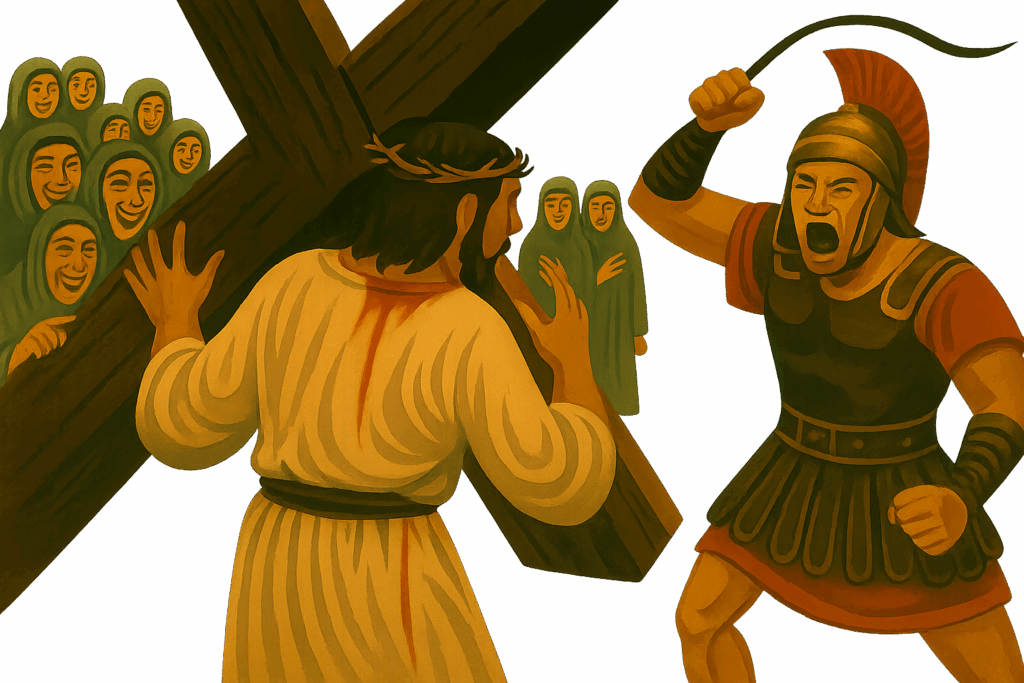
Even skeptics and historians agree on this much: A man named Jesus of Nazareth lived and was crucified under Pontius Pilate. That’s not a matter of faith. It’s history. The blood and water that flowed from His side (John 19:34) suggests pericardial effusion, which is fluid build up caused by suffocation and cardiac failure.
Even Bart Ehrman, an agnostic scholar, writes:
“One of the most certain facts of history is that Jesus was crucified under Pontius Pilate.”
— The Historical Jesus, 2012
Okay, So Maybe He Died, But Did He Rise?
Maybe the disciples only thought they saw the resurrected Jesus.
Maybe they lied about it.
Maybe they hoped to gain riches or fame from this made-up story.
Or maybe they were just … right?
Imagine this: You spend three years living, eating, and walking with someone. Then, just three days after his brutal execution, you see someone who not only looks like him, but claims to be him, alive.
Now imagine being so convinced by this encounter that you’re willing to proclaim it publicly, even under threat of torture and death.
That’s not how deception works.

Could it have been a hallucination? No because mass hallucinations don’t work like that. They are deeply personal and subjective. They don’t happen to large groups in identical ways.
In fact, one of the earliest Christian writings, Paul’s first letter to the Corinthians, says that Jesus appeared to over 500 people at once and remained with His followers for 40 days after His resurrection. Paul wrote this within 20–25 years of the events and even encouraged his readers in Corinth to verify his claims with eyewitnesses, many of whom were still alive at the time (1 Corinthians 15:6).
On the night Jesus was arrested, His disciples fled in fear. But after the Resurrection, those same broken men began boldly preaching in public. Something obviously changed. Perhaps the only explanation is that they believed what they actually saw: the risen Jesus. And they all paid the price for it too. The disciples of Christ were hunted down, tortured, and executed for their faith. They had every chance to recant. But they didn’t.
What else could have compelled them, if not the truth?”
If It Is True, Why Should You Care?
It often perplexes me how some people need almost no evidence to believe.
And yet I’ve also heard people say things like:
“Even if Jesus Christ appeared before me, I would still reject Him because I hate what Christians have done to me.”
I know many Christians and churches have misrepresented the faith. That breaks my heart. We live in a world full of broken people. People who have been hurt by pastors, parents, and friends who twisted Scripture and led others astray.
But Christ is nothing like those people! When you come to Him with an honest heart, His light reveals the truth: the “perfect” life you thought you had was an illusion.
Then, suddenly, you wake up. You begin to see what He sees: A life burdened by brokenness, anxiety, and sin, desperately trying to fill an aching void with pleasure, success, work, money, relationships; everything the world promises will satisfy, but never truly does.
This realization doesn’t come through human logic. Rather, it comes from a supernatural encounter with God. Christians often call this moment the grace of God. And once you experience that grace, eternity with Him suddenly begins to make sense.
You won’t find Christ by crossing off a list of historical facts or logical arguments. It doesn’t work that way. Even the Pharisees saw Jesus perform miracles and yet they still rejected Him. Do you think a vision or a miracle would change your mind? Maybe you think it would, but even then, it might not be enough.
If seeing and hearing weren’t enough for them, no amount of evidence will satisfy a heart that has been hardened.
The Only Evidence I Require
I haven’t even scratched the surface of the overwhelming evidence that supports Christianity. And you know what’s funny? None of the reasons I provided were actually why I ended up believing. Sure, the historical and archaeological evidence may have helped. But my faith didn’t sprout out of intellectual reasoning.
Like all believers, I share the same universal moment every Christian experiences just before they start to truly believe in God: the recognition of a sinful life.
Peter’s first words to Jesus weren’t words of awe at the miracle he had just witnessed. Rather, they were words of conviction:
“Depart from me, Lord, for I am a sinful man.”
— Luke 5:8
At that moment, Peter’s salvation journey was kickstarted.
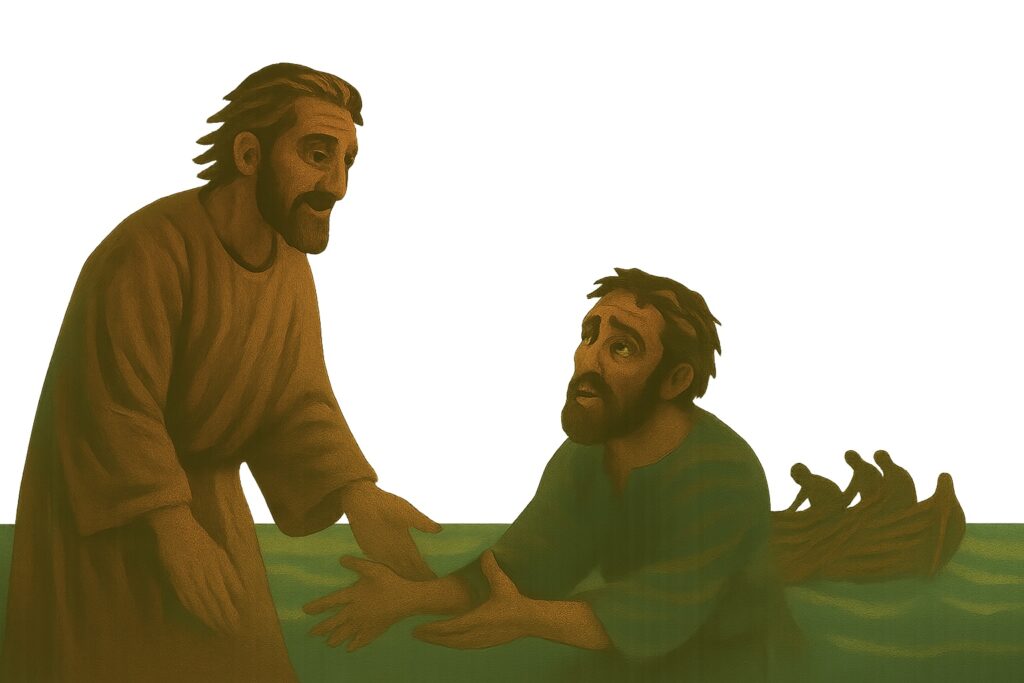
When your soul enters His domain, it’s as if someone turned on the lights in every dark room of your life. And when you seek Him with all your heart, mind, and soul, you won’t need proof anymore. Because you will find Him.
Oh, how can I possibly explain what happens to the human soul when it trespasses into the presence of God?
How can I put into words the insurmountable joy that floods a person’s spirit, even in the midst of failure, suffering, and pain, when they first encounter His love?
Over the years, I’ve read and seen numerous historical records, archaeological discoveries, and miracle accounts. I’ve also witnessed firsthand the transformation of broken, depressed, and angry people into gentle lovers of life.
I’m proof of it myself.
But even if, by chance, all my memories and experiences were erased, I believe I would still choose to believe.
Why?
Because the more I know Christ, the less evidence I require to believe.
And if nothing I’ve written pierced your heart today, I hope you carry these three words with you always:
Jesus loves you.